
How to choose a road pavement? A Guide to Soil and Asphalt
Published:
Why is a road trip necessary?
Road pavement is a construction technique used to dense soil, sand, asphalt, and other pavements. The quality of squeezing directly affects the strength of a road, field, or foundation.
If the soil or asphalt is not compacted sufficiently, sedimentation, cracks, and irregularities may appear in the pavement later. That is why it is important to choose a suitable roller in road construction, industrial area, warehouse area, residential complex, and rural road work.
When choosing a rink, it is necessary to look not at its exterior, but at the type of work to be performed. The technique you need to dense the soil may not match the last layer of asphalt.
Main types of cattle
Road rollers vary depending on the principle of operation and the type of drum. Some of the most commonly used types are as follows.
Vibratory roller with one drum
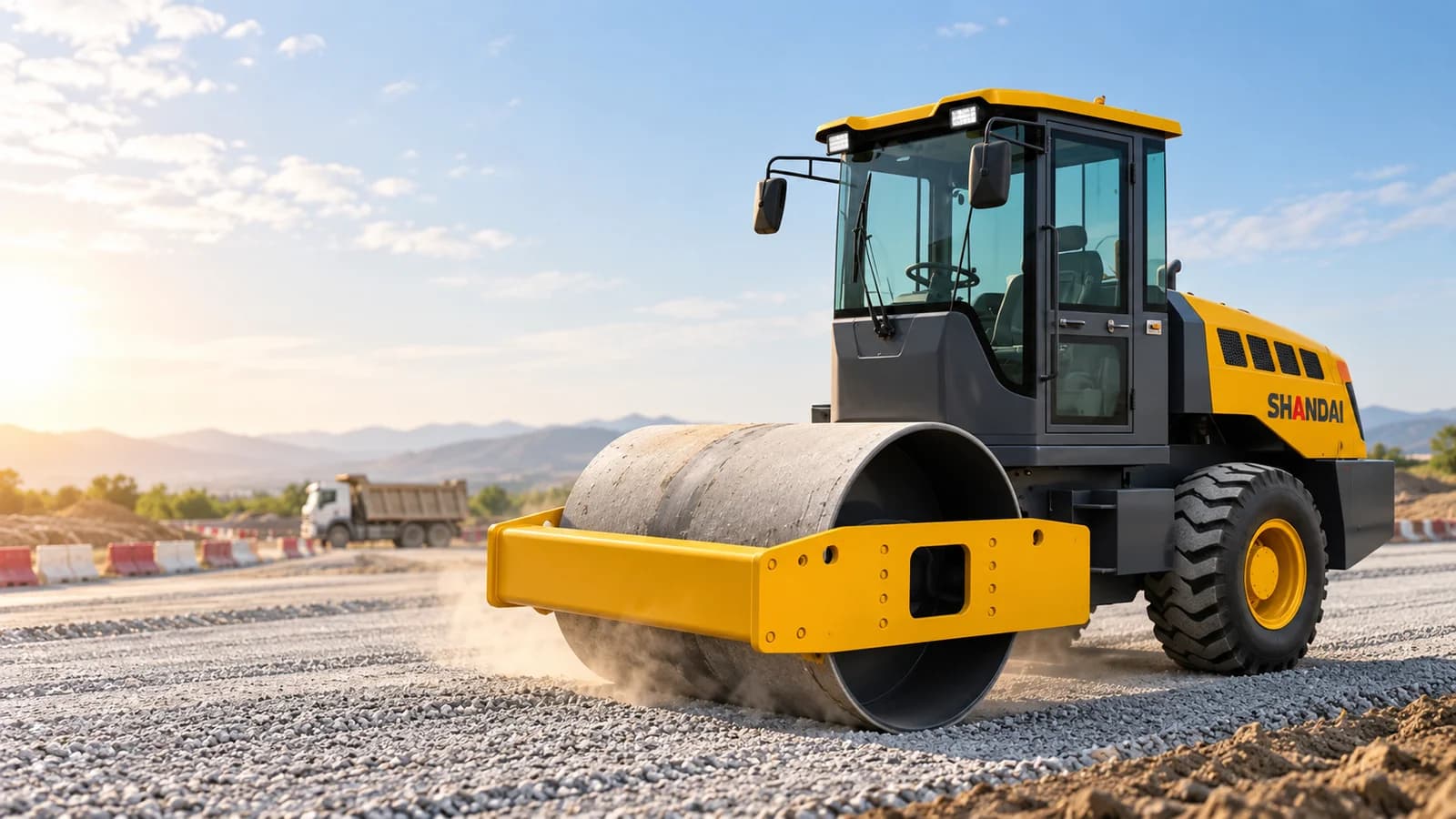
A single-drum roller will have a large steel drum at the front and tires at the rear. It is typically used to dense soil, sand, gravel, and the base layers of the road.
The vibration system creates the vibration of the drum. This vibration helps the material particles to be more densely arranged.
Single-drum rollers are convenient for doing the following work:
- preparation of the road foundation;
- compacting the soil;
- leveling of sand-gravel layers;
- preparation of the construction site;
- pre-foundation work;
- industrial areas and warehouse areas.
Two-drum reel
A two-drum roller will have steel drums on the front and back. It can be used to form a flat and high-quality layer of asphalt.
This type of coil is more commonly used in:
- the final layer of asphalt pavement;
- city roads;
- parking lots;
- pedestrian sidewalks;
- small areas;
- asphalt repair work.
Pneumatic Tire Roller
A pneumatic tire roller puts pressure on the pavement using multiple rubber tires. It is used in some asphalt work and coating processes.
The type of technique should be selected depending on the working project and layer material.
How to pean for soil?
When compacting soil, sand, and gravel, a single-drum vibratory roller is usually chosen. Not only the weight of the roller is important, but also the type of drum and the possibility of vibration.
Depending on the type of soil, the approach changes:
| Material | Aspect to Consider |
|---|---|
| Sand | Vibration and uniform pressure |
| Gravel | Enough Weight and Drum Power |
| Muddy Soil | Material Moisture and Density Regime |
| Mixed Soil | Work Area Condition and Layer Thickness |
| Road Base | Step-by-Step Densification |
A single press on the soil in a very thick layer may not yield a quality result. Usually, the material is laid layer by layer and then dense. The technology of the work depends on the project and the material.
What pavement to choose for asphalt?
When working with asphalt, smooth drum rollers are more used. The main goal in this is to evenly dense the asphalt pavement and achieve a smooth surface.
When choosing for asphalt works, it is important to:
- thickness of the asphalt layer;
- the size of the cultivated area;
- asphalt temperature;
- drum type of katok;
- water spraying system;
- Katok's maneuverability.
A water spray system can help reduce asphalt sticking to the steel drum. This aspect is especially important when working with hot asphalt.
For small road repairs and narrow areas, a more compact rink may be suitable. On the highway and large areas, higher efficiency equipment is required.
Why is the weight of the coil important?
The weight of the coil directly affects the result of the densification. But the heaviest coil does not mean that the heaviest coil is the best choice for every job.
Light or mid-grade skating rinks can be suitable for small sidewalks, parking lots, narrow spaces, and local repair work. Heavy grade skating rinks, on the other hand, will be more suitable for highways, large industrial areas, and thick-layer materials.
When choosing, determine the following:
- thickness of the layer is recorded;
- type of material;
- project area;
- the amount of work to be done per day;
- transport and access roads;
- Place of storage of equipment.
If the coil is too light, it can become difficult to achieve the desired density. A model that is too heavy can be uncomfortable in small areas or put excessive pressure on some coatings.
How does the vibration system work?
A vibratory roller denses the material through the vibration of the drum. This system can be very useful in soil and gravel layers.
The vibration mode should be selected according to the material and working conditions. Excessive vibration may not be appropriate for some thin coatings. Therefore, the operator must be well aware of the control capabilities of the equipment.
For high-quality work with the skating rink, it is important to:
- spread the layer evenly;
- drive in the designated direction;
- pressing the layers, overlapping each other;
- transfer of the required amount;
- control the moisture content of the material.
The quality of the feed depends not only on the technique, but also on the working style of the operator.
Select a category that fits your workspace
Where the skating rink operates also affects the choice. The requirements for a narrow city street, a major highway, a warehouse area, and a rural road vary.
Narrow areas
A compact, easy-to-turn skating rink may be suitable for narrow lanes, parking lots, or small asphalt repairs. In such a place, the width of the equipment and the maneuverability come to the fore.
Highway and open areas
A high productivity roller will be required in a wide road, large construction area, or industrial area. This is where the speed of work, drum width, and working weight will be important.
Uneven or tilted regions
Operator safety and the stability of equipment in niche areas require special attention. Before work begins, the field must be inspected, a safe course of movement must be established.
Daily inspection before using the cell
It is recommended that the rink be inspected briefly every day to ensure reliable long-term operation. This will prevent unexpected malfunctions and work stoppages.
Checklist:
- engine oil;
- coolant;
- hydraulic system;
- drum condition;
- tires, if any;
- water spraying system;
- alarms and lights;
- vibration system;
- brakes;
- fasteners.
If an oil leak, strange sound or vibration malfunction is noticed, it is important to contact a service service before continuing to use the technique.
Operator safety
It is necessary to follow safety rules when working with an ice rink. Improper handling with heavy equipment can pose a risk not only to the quality of the coating, but also to people and surrounding objects.
Basic Rules:
- that there should be no strangers in the work zone;
- Check the surroundings before turning;
- work carefully in the niche;
- Do not exceed the speed limit;
- do not disembark from moving equipment;
- when work is finished, put the roller in a level and safe place;
- Complete maintenance in time.
SHANDAI Selection of Road Layers
SHANDAI road rollers can be selected for a variety of densification tasks. To determine the appropriate model, information should be provided by material type, work area, and daily volume.
For example, a vibrating single-drum roller may be suitable for the preparation of soil and gravel foundation. For the final layer of asphalt, a smooth drum or another type of roller will be selected to suit the project requirement.
Send the following to the IRON FORCE specialist:
- what material is dense;
- how thick the layer is;
- how big the work area is;
- whether it's a road, a parking lot, or an industrial area;
- what is the volume of work per day;
- Where the technique works.
This will make it easier for you to choose a suitable model and layout based on this data.
Conclusion
Road pavement is an important technique that affects the quality of construction. It will not always be right to make the same choice for soil, gravel, and asphalt.
A vibratory roller model will be considered for soil and road foundation, and a smooth drum model will be considered for asphalt work to suit pavement requirements. When selecting equipment, evaluate material, layer thickness, area size, roller weight, and operator comfort together.
Properly chosen coil will help the coating to be sturdy, even and long-lasting.
Models mentioned in this article
Frequently asked questions
For the densification of layers of soil, sand and gravel, a single-drum vibratory coil is usually chosen.
Smooth drum rollers are more commonly used for asphalt work. The exact choice depends on the asphalt layer and project requirement.
The weight of the coil affects the densification quality. It must be appropriate for the thickness of the layer, the material, and the size of the work area.
The vibrating coil helps to release dust and gravel particles more densely by vibrating the drum.
The price depends on the model, weight class, completion, and terms of delivery. Send a request for an exact price.